
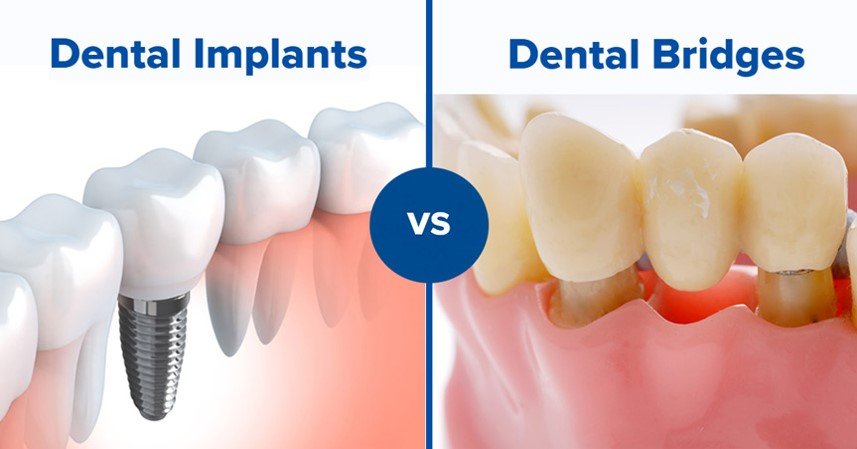
Dental Implants vs Bridges vs Dentures
Struggling to eat comfortably or smile confidently because of missing teeth? You are not alone. Missing teeth can affect the way you chew, speak, and even the shape of your face over time. The good news is that modern dentistry offers three main tooth replacement options—dental implants, bridges, and dentures. Each option has its own advantages, limitations, and ideal use cases, so understanding the differences can help you make a more confident decision.
Let’s take a closer look at each option so you can see which solution may best fit your oral health needs, budget, and long-term goals.
What is a Dental Implant?
A dental implant is a long-term tooth replacement option that replaces both the visible tooth and its root. During treatment, a titanium post is placed into the jawbone to act like an artificial root, and a custom-made crown is attached on top. Because implants integrate with the bone, they can provide a stable, natural-feeling result that closely mimics a real tooth.
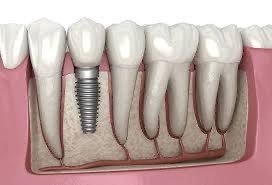
Why patients choose implants:
– They look and feel very close to natural teeth
– They help preserve the jawbone, which can support facial structure over time
– They do not rely on neighbouring teeth for support
– With good care, they can last for many years
Best for: Patients who want a durable, fixed solution and have enough healthy jawbone to support treatment.
Things to consider: Implants usually cost more upfront and involve a surgical procedure, so they may not be the best fit for every patient.
What are Dental Bridge?
A dental bridge replaces one or more missing teeth by filling the gap between existing teeth. It usually works by placing crowns on the teeth next to the space and attaching an artificial tooth between them. Bridges are fixed in place, which means you do not remove them for cleaning the way you would with dentures.
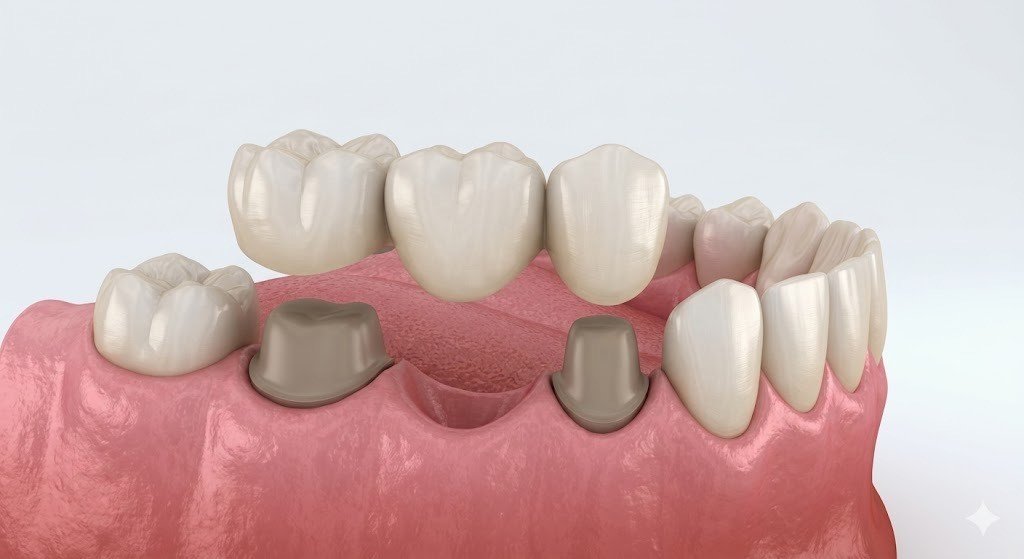
Why patients choose bridges:
– They restore chewing ability and appearance with a fixed solution
– Treatment is often faster than implant treatment
– They can be a good option when the teeth beside the gap already need crowns
Best for: Patients missing one or a few teeth who want a non-removable option but may not be ideal candidates for implants.
Things to consider: A bridge usually depends on nearby teeth for support, which may require reshaping otherwise healthy teeth.
What are Dentures?
Dentures are removable appliances used to replace several missing teeth or a full arch of teeth. They can be partial, when some natural teeth remain, or complete, when all teeth in an arch have been lost. Dentures can improve appearance and basic function, and they are often the most budget-friendly way to restore multiple missing teeth.
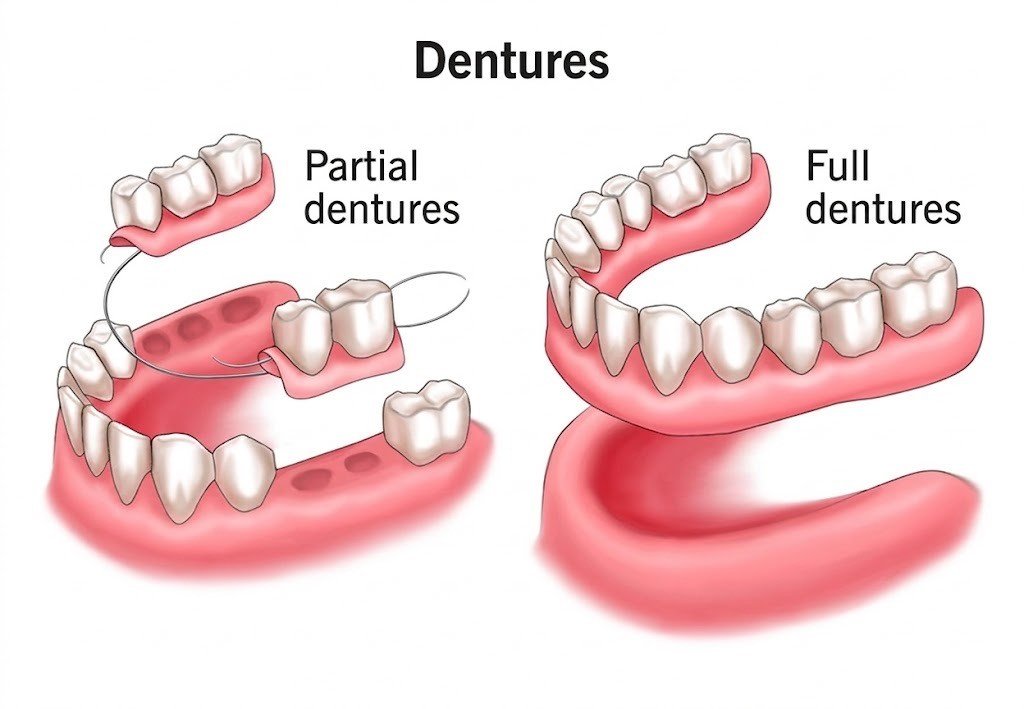
Why patients choose dentures:
– They are often the most affordable tooth replacement option
– They can replace many or all missing teeth at once
– They are removable, which can make cleaning easier for some patients
Best for: Patients looking for a lower-cost solution or those who need to replace multiple missing teeth without surgery.
Things to consider: Dentures can take time to adjust to, and some patients find they may loosen over time and need periodic adjustments.
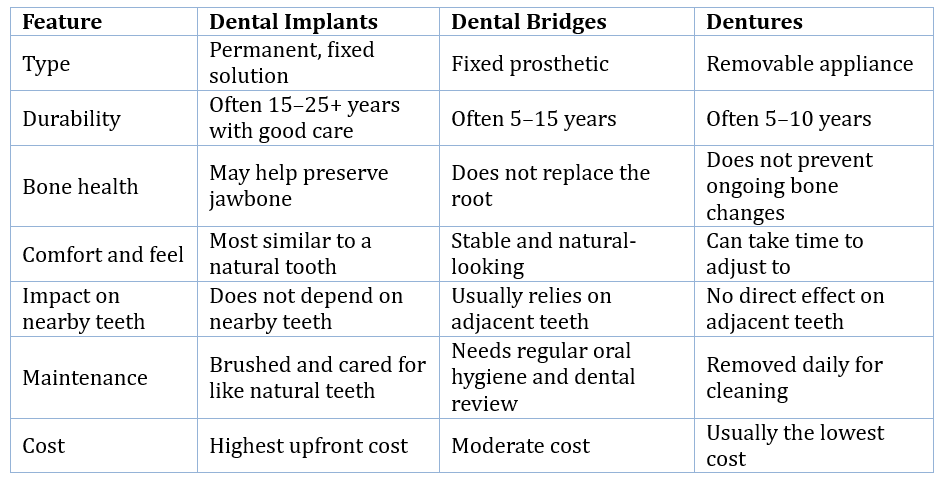
Comparison Table
Frequently Asked Questions
Are dental implants painful?
Most patients report that implant treatment is more manageable than they expected. Because the procedure is planned carefully and done with appropriate anaesthesia, discomfort is usually temporary and can often be managed with aftercare advice from your dentist.
How long does a dental bridge last?
A dental bridge can often last many years when it is well made and properly cared for. Its lifespan depends on oral hygiene, bite forces, and the health of the supporting teeth.
Do dentures feel natural?
Dentures can restore appearance and function well, but they may feel different from natural teeth at first. Many patients adjust over time, especially after follow-up fittings and small adjustments.
Which tooth replacement option is best?
The best option depends on how many teeth are missing, the condition of your gums and jawbone, your budget, and your treatment goals. A dental consultation is the best way to get a personalised recommendation.
Final Thoughts
Choosing between implants, bridges, and dentures is not just about cost—it is about comfort, function, appearance, and your long-term oral health. The right option for you depends on your unique dental condition and what matters most in your daily life. If you are considering treatment for missing teeth in Nigeria, the best next step is to speak with a qualified dentist who can assess your mouth and recommend a personalised solution. Booking a consultation can help you move forward with clarity and confidence.